

With the rise of luxury outdoor living, your backyard can now become a fully immersive theater under the stars. But as you plan, it’s easy to get overwhelmed by technological options. To help, we’ve compiled a list of the best outdoor projectors, broken down best-in class, mid-range, and budget choices in each category, plus key criteria to guide your decision.
At Aviva Pools Nashville South, we don’t just install fiberglass pools, we design complete entertainment environments where lighting, sound, and technology integrate seamlessly with luxury fiberglass pools and outdoor architecture.
Projectors: Bringing the Big Screen Outdoors
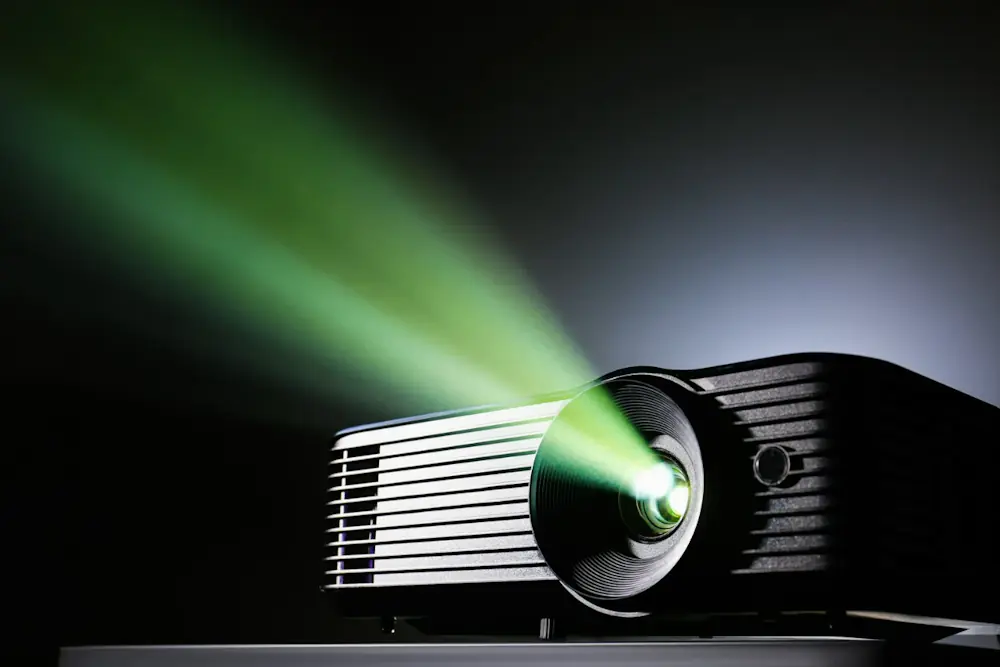
What to Look For:
- Brightness (lumens/ANSI lumens): To counter ambient light, aim for 2,500 lumens or more for a permanent outdoor install.
- Resolution & image quality: 1080p is minimum; 4k (or 4k-enhanced) is ideal for sharper visuals
- Contrast and color reproduction: A good dynamic range and color accuracy to make the image “pop”
- Lens shift / keystone correction / autofocus: These features simplify setup and alignment.
- Durability or protection: Ideally, either weather-rated unit or a housing/enclosure.
- Connectivity & smart features: HDMI, Wi-Fi, streaming support, and optional integration with home automation.
Tips for Installing Projectors Outdoor:
- If mounted permanently, position high behind your seating to avoid
- If not weather-related, use protective housing to shield it from dew, insects, etc.
- Integrate into smart systems so one tap turns on lights, screen, and projector.
- Hardwire power and include a local (junction box) for future upgrades.
Projection Screens: The Canvas for Your Film
The screen is as important as the projector, a high-quality screen gives you better contrast, fewer wrinkles, and durability.
What to Look for:
- Tension or fixed-frame surfaces that stay flat.
- Ambient light rejection coatings in brighter environments.
- Portability if you want flexibility (inflatable or roll-down).
- Frame material and weather-resistant.
- Size and aspect ratio appropriate to your projector and viewing distance.
Screen Integration Tips
• Plan screen placement early so seating, sidelines, shade, and wiring are optimized.
• Use a matte white or gray screen for general use; ambient-light screens for rooms with more stray light.
• Mount with vibration dampening if near pool equipment or in windy areas.
• Considering concealing the frame in architectural elements (pergolas, pool house, etc,) for a seamless look.
Outdoor Lighting: Enhancing Ambience
Your lighting design should complement the film experience, not compete with it.
What to Look For
- Low-voltage LED systems: safer, longer-lasting, and energy-efficient
- Dimmable / zoned control: allow flexibility between “movie mode” and “gathering mode”
- Warm color temperatures: (2700K-3000k) to reduce blue light spill.
- Shielded or indirect lighting: downlights, wall-washers, up-lights.
- Smart control / automation: schedule fades, sensor triggers, or integrated scenes.
Lighting Design Tips
- Use a zone lighting map: house, seating, path, pool, landscaping, screen periphery.
- Pre-wire conduit so you can add future fixtures (e.g. up-lights or fiber optics).
- Automate fades: dim to “movie mode” automatically when the projector turns on.
- Test for spill: sit in your viewing line and ensure no fixture glare reaches your screen.
Audio / Surround Setup: Immersive Sound Outdoors
A great image without matching audio feels flat. Outdoor audio presents special challenges, open air, echo, and ambient noise, so you want speakers built for the elements and placed thoughtfully. Music and movie soundtracks feel richer when sound disperse evenly across open air. Outdoor speakers are designed to handle humidity, pool chemicals, and broad coverage areas.
What to Look For
- Weatherproof / outdoor-rated speakers (IP rating, sealed enclosures).
- Wide dispersion: good coverage across seating zones.
- Amplifications / power capacity: to handle open-air losses.
- Subwoofer integration, if deep base is desired.
- Zoned / multi-channel support: ability to control audio in sections.
Audio Integration Tips
- Use in-ground or recessed subs if noise ordinances or aesthetics are concern.
- Wire hidden or underground conduits early
- Use a dual-zone or multi-zone amplifier / AVR to separate your pool/dining audio from your movie zone.
- Consider delay/distance compensation when speakers are spread out.
- Hide speakers within planters, under benches, or behind rockscapes to preserve design continuity.
Integration & Design Best Practices
The magic of a poolside theater lies in how seamlessly it integrates with the environment. At Aviva Pools Nashville South, we design more than pools, we design experiences for memories together with friends and family. By blending premium fiberglass pools with smart technology, curated lighting, and integrated entertainment, we transform ordinary backyards into destinations for relaxation, connection, and cinematic moments. Contact us today to take the first step towards your own outdoor theater.

