
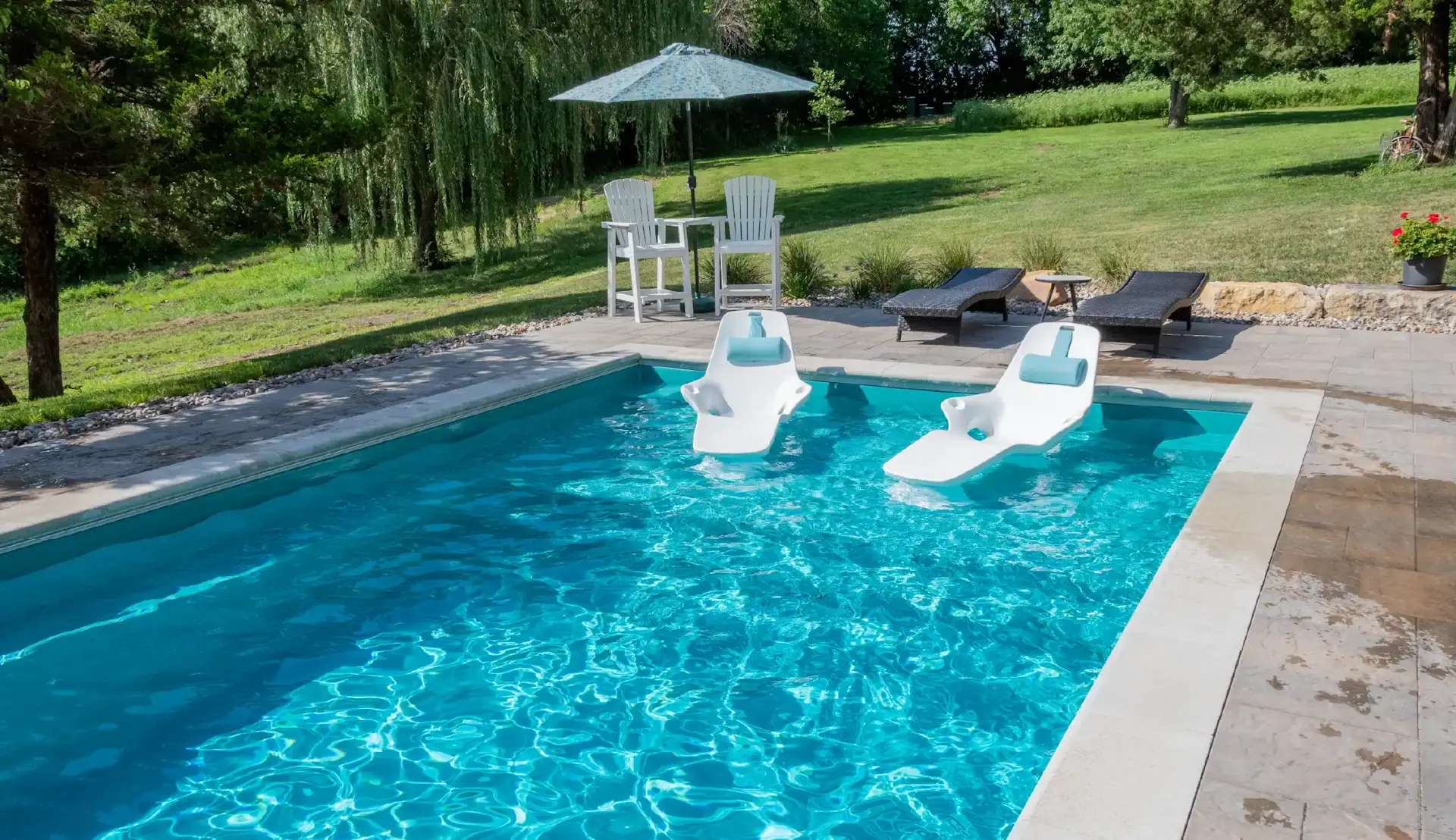
A swimming pool is more than just a place to cool off and relax in the summer, it’s an investment in your home, lifestyle, and time with family and friends. In Middle Tennessee, where warm seasons stretch from March to November, outdoor living is a way of life and for many homeowners they’re choosing to invest in their backyard by adding custom swimming pools, outdoor kitchens, fire features, and landscaping to their properties.
One of the biggest questions homeowners ask before starting their project is: How do you finance a swimming pool and what should I know before you do?
Financing a swimming pool can make your dream backyard achievable sooner, but it’s important to understand your options, current interest rate trends, and how to budget wisely. In this guide, we’ll walk you through everything you need to know before financing a swimming pool in Middle Tennessee from loan types and rates to practical budgeting tips that protect your investment.
Why Many Middle Tennessee Homeowners Finance their Swimming Pool
Adding a swimming pool is a major home improvement project. Depending on size, materials, features, and landscaping, cost can vary widely. Financing allows homeowners to spread their investment over time instead of paying entirely out of pocket. There are several reasons financing has become common for backyard projects:
- Preserve Cash for Other Investments
Rather than tying up savings in a single project, financing allows homeowners to maintain liquidity for emergencies, travel, investments, or other home upgrades. - Build the Backyard You Actually Want
Many homeowners realize that financing allows them to include features that truly transform their space, like a tanning ledge, spa, water feature, outdoor kitchen, fire feature, etc. - Start Enjoying Your Backyard Sooner
Instead of waiting years to save the full project amount, financing allows you to start enjoying your swimming pool sooner.
Pool Financing Options Available to Homeowners
There are several ways to finance a swimming pool. Each has advantages depending on your goals, home equity, and timelines.
- Home Equity Loans
A Home Equity Loan works similarly to a credit line secured by your home. Think of it as a second mortgage on your home by allowing you to borrow against the equity you’ve built in your home.Your lender evaluates your home’s current market value compared to your existing mortgage balance. They also take into consideration your credit score and income. The difference between your home value and mortgage balance represents your available equity. Lenders typically allow homeowners to borrow up to 80-85% of the home’s value.Home equity loans are structured like traditional mortgages with fixed interest rates with loan terms between 10-20 years. Using a home equity loan gives homeowners peace of mind with predictable monthly payments and lower interest rates compared to unsecured loans. - Home Equity Lines of Credit (HELOC)
A HELCO works more like a credit line than a traditional loan. Instead of receiving a lump sum, you draw funds as needed. A HELCO has two phases, 1) Draw Period where you can withdraw the funds as needed, and 2) Repayment Period where you begin to pay back the borrowed balance.While you have flexible access to funds, the biggest disadvantage is rates are often variable, meaning they change over time. - Pool Financing Loans (Unsecured Home Improvement Loans)
Many lenders specialize in loans specifically designed for swimming pools and outdoor living projects. Unlike home equity financing, these types of loans are unsecured, meaning they do not require your home as collateral.Unlike home equity or HELCO, these loans do not require collateral, meaning your home is not tied to the loan. Because the loans are not secured, interest rates are typically higher than home equity options. However, a pool financing loan offers faster approvals, no appraisal requirements, and no risk to your home if you default. For homeowners who want speed and simplicity, personal loans are often the easiest financing path.
How Credit Scores Impact Swimming Pool Financing
Your credit score plays a major role in determining both approval and interest rate. Most lenders prefer borrowers with credit scores above 670 for pool loans.
Improving your credit score even slightly before applying for financing can significantly reduce the cost of borrowing.
| Credit Score | Financing Impact |
| 704+ | Best rates and loan terms |
| 700 – 739 | Good rates with strong approval odds |
| 600 – 699 | Moderate rates |
| Below 660 | limited options and higher APR |
Smart Budgeting Tips Before Financing a Swimming Pool in Middle Tennessee
-
- Plan for the Entire Backyard
Many Middle Tennessee homeowners only finance the swimming pool itself then struggle to fund or delay the surrounding space. A swimming pool without adequate decking, landscaping, furniture, and lighting can feel incomplete. Instead, budget for the entire outdoor living experience from the beginning. This approach prevents the need for multiple loans or expensive upgrades later. - Maintain an Emergency Fund
Financial experts typically recommend maintaining three to six months of living expenses in savings. As unexpected expenses, from home repairs to medical bills, can occur anytime it’s recommended to avoid draining emergency funds entirely to fund a home improvement, swimming pool, or backyard project. - Choose the Right Loan Type
Many homeowners choose the longest loan term to reduce monthly payments. While this lowers short-term costs, it increases the total interest paid. Choosing balanced term can save thousands over the life of the loan. - Choose the Right Loan Type
Many homeowners choose the longest loan term to reduce monthly payments. While this lowers short-term costs, it increases the total interest paid. Choosing balanced term can save thousands over the life of the loan. - Hidden Cost Many Homeowners Forget
Beyond swimming pool construction and financing cost, many homeowners forget about the ongoing expense of swimming pool ownership.
- Plan for the Entire Backyard
Typical annual pool costs include:
- Chemicals
- Maintenance supplies
- • Electricity for equipment
- • Natural gas or propone for heaters
- • Occasional repairs
Basic pool maintenance typically costs $80 to $200 per month depending on the system and usage. Including these expenses in your long-term budget prevents financial surprises later.
Financing a Swimming Pool in Middle Tennessee the Smart Way
A swimming pool can improve how you enjoy your home during Middle Tennessee’s long, hot summer. Financing a swimming pool doesn’t have to be complicated and with the right plan, it can be one of the smartest investments you make in your home. The key is working with a team that understands both the construction process and the financial considerations that come with it. From helping you evaluate the financing options to designing a backyard that fits your long-term budget, the right guidance can make the process far smoother.
If you’re considering installing a swimming pool in Middle Tennessee, the best first step is simply starting the conversation. Schedule a no-obligation consultation with Aviva Pools Nashville South to explore swimming pool designs, financing options, and what it would take to bring your backyard vision to life

